

Can You Retire Full-Time in An RV In Canada?
Are you thinking about full-time retiring and leaving an RV in Canada? Here’s what you need to know before you hit the road.
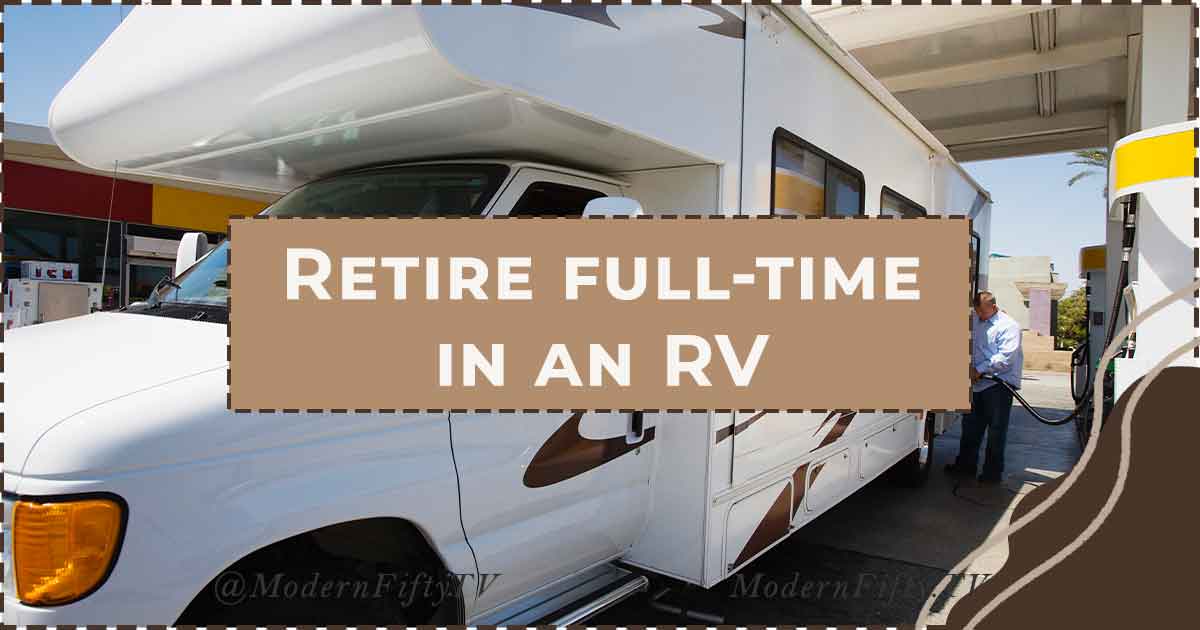
This is not your parents’ retirement. Give up your home and go on the road to life.
Living full-time in an RV represents a new alternative way of retirement in Canada.
For some living in an RV full-time is a way to
- Remove mortgage dead
- Reduce expenses
- Build a likeminded community
- A unique sense of liberty and exploration
Do you ever wonder how to retire and live in an RV full-time in Canada?
I do.
So, I have decided to do my research and record the results here.
Are you planning to sell your house to cover the costs of travel and living? Have you watched many YouTube videos about living in an RV in the US?
Canadians face obstacles our American neighbors to the south aren’t affected by. I am sure they have issues we aren’t aware of but right now I want to concentrate on frequently asked questions about full-time RV living in Canada.
I don’t pretend to have all the answers, but I will share the information I have been able to find.
Can You Retire In An RV In Canada?
Sit down ask yourself these questions and weigh in some pros and cons…
- What are you expecting out of it?
- Can you live on less money?
- Are you OK to go to walk to the washroom outside or in a bush?
- Are you attached to your belongings?
- Are you searching for a new experience?
- Are you a creature of habits?
- Where do you want to travel?
- Do you want to move around or stay in 1 or 2 places?
- What type of RV would you like to live in?
- How do you find the perfect RV?
- Where would your permanent address be?
- What will your monthly and annual budget look like?
- What will happen to your house, car, and other stuff?
- What will happen if you get ill or injured?
- Can you have a pet?
- You will have to book your campsite in advance during the peak season
- Can you live with a limited resource? For example, water for the toilet or not being able to turn on the coffee pot and hair drier at the same time.
- It’s individual for each person. Full-time RVing isn’t a realistic lifestyle for all.
Before you decide on RV full-time, visit online RV websites, YouTube channels, and Facebook groups to learn all about full-time RV life and how to shop for an RV. I will link some resources at the end of this article.
You may also like:
- How to prepare for the financial crisis – Personal Contingency Plan
- Top 5 Retirement Concerns that I am Thinking About at 55
- A complete guide to renting out a spare room or a basement for extra money
- 17 creative ways to make extra money on the side after 50
Pros and Cons of Full-Time Retirement in an RV in Canada
Here are just some of the pros and cons of living in an RV full-time to consider. Of course, yours may look different.
| PROS | CONS |
| Freedom to go where you want and when you want | Lack of space especially in the kitchen and storage |
| Traveling across the province country or continent | Driving around big cities |
| Ability to explore nature | Simple lifestyle with less staff |
| You can save money and even live debt-free | Maintenance |
| Meeting new people | Distance from family and friends |
| Ability to visit family and friends | Extreme weather (winter cold and summer heat) |
| Less maintenance than home | Working remotely can be tough |
| Can always take a break and put the RV in a storage | Lack of privacy |
| Can always take a break and put the RV in storage | Health care |
Unusual Aspects of Life In RV During Retirement?
NO ONE CARES WHO YOU ARE
RVeres don’t care about your career or past achievements. No one asks what you’ve done just where you have been, where you’re going, and what you’ve seen.
TOILET THING
It’s important to understand that the toilet experience is quite different from the convenience and luxury of the brick-and-mortar toilet. Experienced RVers know that there is a right way and a wrong way to handle the dirty job.
COMMUNITY OF LIKEMINDED PEOPLE
You’re going to make new friends all the time. Once a new RV rolls into the park, neighboring RVers are quick to ask where you are from and invite you to their campfire.
VAN-LIFE WITH YOUR PARTNER
You need to like your travel partner. A lot. If you value alone time and space from your partner, then RV lives may not be for you. You have to have a friendship and be compatible.
How Much Does It Cost to Retire In RV full-time?
Full-time RVing can cost as much as $30,000 a year. On average, the monthly cost of living out of an RV is $1,000 – $2,100. Insurance is $1100/year. The cost of fuel, campsite fees, food, and other essentials add up quickly.
You can expect to spend about $1,400 on a maintenance repair for your RV and new tires.
RV Parks in Canada can cost, on average, anywhere from $25-$90 per night for a fool RV hookup. Or $750 – $2,700 a month. In Toronto, the prices are about $1,200 a month for a studio apartment. Almost the rent of a small apartment.
However, you don’t need full hookups (water and electricity), as well as greywater and sewage (backwater) disposal on a daily basis. “Going wild” during your travel can be another option.
Here is a list of things to consider when you are calculating your budget.
- Campsite/parking fees
- Gas
- Food
- Pet food
- Insurance and registration
- Utilities (internet phones)
- Healthcare Insurance
- Household maintenance (cleaning supplies, lightbulbs, etc.)
- Personal items (clothing, toiletries, etc.)
- Maintenance for your RV (and any other vehicle you have)
- Emergency fund
- Savings and investments
- Debt payments (credit card, financed RV, etc.)
- Entertainment
Is it a cheap retirement living in an RV?
For some retirees, this is the perfect way to see the country, but for those who are cost-conscious, it may be hard to justify the costs. With RVs ranging in price from $75K to $500K, it’s hard to compare them to a home that’s paid off or near being paid off and find financial benefit.
But retirement isn’t all about dollars and cents. If it’s your dream to travel the country during retirement, an RV might be the perfect way to have the adventure of a lifetime.
Where to Buy RV in Canada
If you are thinking about the RV lifestyle, you should attend at least one RV show. You will find their different models of motorhomes and trailers as well as expert advice.
If you’re looking to buy, shop around to find a reputable dealer. Equally important to find an RV sales consultant who understands your personal goals and what you’ll be using your RV for.
Aside from going to dealers, you can find used vehicles via online classified ad sites like Kijiji and Facebook Marketplace.
If you’re just trying out this lifestyle or going on a one-time trip, you might want to rent. A classic option is to rent a rig from CanaDream, which has all types of vehicles. Alternatively, you could rent someone else’s RV with an Airbnb-type business like Ottawa-based RVezy.
Check out CanaDream RVING 101 – A Guide to RV Types
Can you live in an RV year-round in Canada?
Yes, you can live in an RV during a Canadian winter. Some Canadian cities are still warm enough to park the RV even in the winter months. But it isn’t easy.
Medical Insurance for Canadian full-time RV life.
One of the challenges Canadians face, if they are full-time RV living, is ensuring they keep their medical coverage active. You must reside in one province for 6 months of the year to have provincial medical insurance.
Travel medical insurance can help if you get suddenly injured or sick. Also, you’ll need to consider your regular health care like doctor’s appointments optometrist visits, dental care, and prescriptions.
Canadians who live full-time in an RV must have a physical address and NOT a P.O. Box. This is a requirement for your driver’s license, medical and vehicle insurance, and passport.
Your permanent address can be a family member, a friend, the property you own, or even a campground you live in. Make sure you are carrying a copy of a receipt just in case you need it.
Do You Need a Special Driver’s License for an RV?
You don’t need a special license to drive a motorhome if it’s less than 11,00 kgs and does not have air brakes. Anyone with a Class G license can drive most of the motor homes. However, for the larger units, you will need a special license.
Living in an RV full-time and Canadian TAX
Yes, you will still need to file taxes in the province of your permanent residence. How it works will depend on the province and your individual situation, please consult a professional.
Working On The Road
Internet access may be limited depending on the campground. You may consider a wi-fi booster or find wi-fi at cafes and libraries.
“If your home is moving, you never settle down. Sometimes you’re just driving for miles and miles and miles, and you just want to be somewhere. There’s a reason why we build houses.”
CONCLUSION
Hopefully, this article gave you some ideas and insight on if you are a match for full-time RVing.
If you decide that retirement in an RV lifestyle is right for you, do yourself a favor and rent a motorhome for a week or two. For about $ 900 – $ 1300 per week, you can get a taste of how much you will or won’t – enjoy living out of an RV. This small investment in your future could save your retirement.
As for me personally, I will pass on this idea.
Thanks for reading this article – I hope you found it helpful. As always, I’d love to hear from you! Have a fabulous week and take care! Irina Nikitina – Founder of Modern Fifty TV
RESOURCES:
I would encourage retirees to go online and find out as much as possible from those who are already RVing. There are countless blogs and articles about RV destinations, tech tips, and what is new. Here are some of them.
- Canadian RV Life – YouTube channel
- Enjoy Your RV lifestyle to The Fullest extent – https://livingthervlife.net/tips-for-fulltime-rv-living/
- Top Campgrounds & RV Parks in Canada – here
- Canadian RVing – https://roamingrv.com/
Instagram Accounts:
USA resources:
19 Expert RVers Weigh In On Fulltime RV Finances
https://www.rvingwomen.org/ – Founded by Zoe Swanagon and Lovern King in 1991. Community of Women living in the US who seek adventure on the road. It has over 2000 members. Sharing recreational activities, information, and support with other women RVers.
There are so many write ups about rv living in Canada, but no one writes about sites where you can camp/park. Many places south of the border offer excellent deals for long stay campers or rv living people. Perhaps someone will take up the challenge and start listing places where long term rv dweller can go in this country. Costs are important to campers/rv dwellers and maybe it’s time for us to get together, pool resources and either build our own camp, or make a central list site where it is possible to stay and have the services required.